He Was the Real Thing
I have only known Tom Stoppard in a small way, through reading his plays, which I’ve never even seen performed. And yet, when I saw the retrospectives and obituaries last week, I felt that a pillar had been knocked out of our cultural temple as English speakers. Stoppard was a celebrated playwright with a Shakespearean affinity for wordplay, and his inky thumbprints are on screenplays all over Hollywood, but, to me, he is first and foremost a writer. A writer’s writer. Writing’s husband of twenty-five years, a man too familiar with writing to miss her limitations, but far, far too in love to abandon her on account of them.
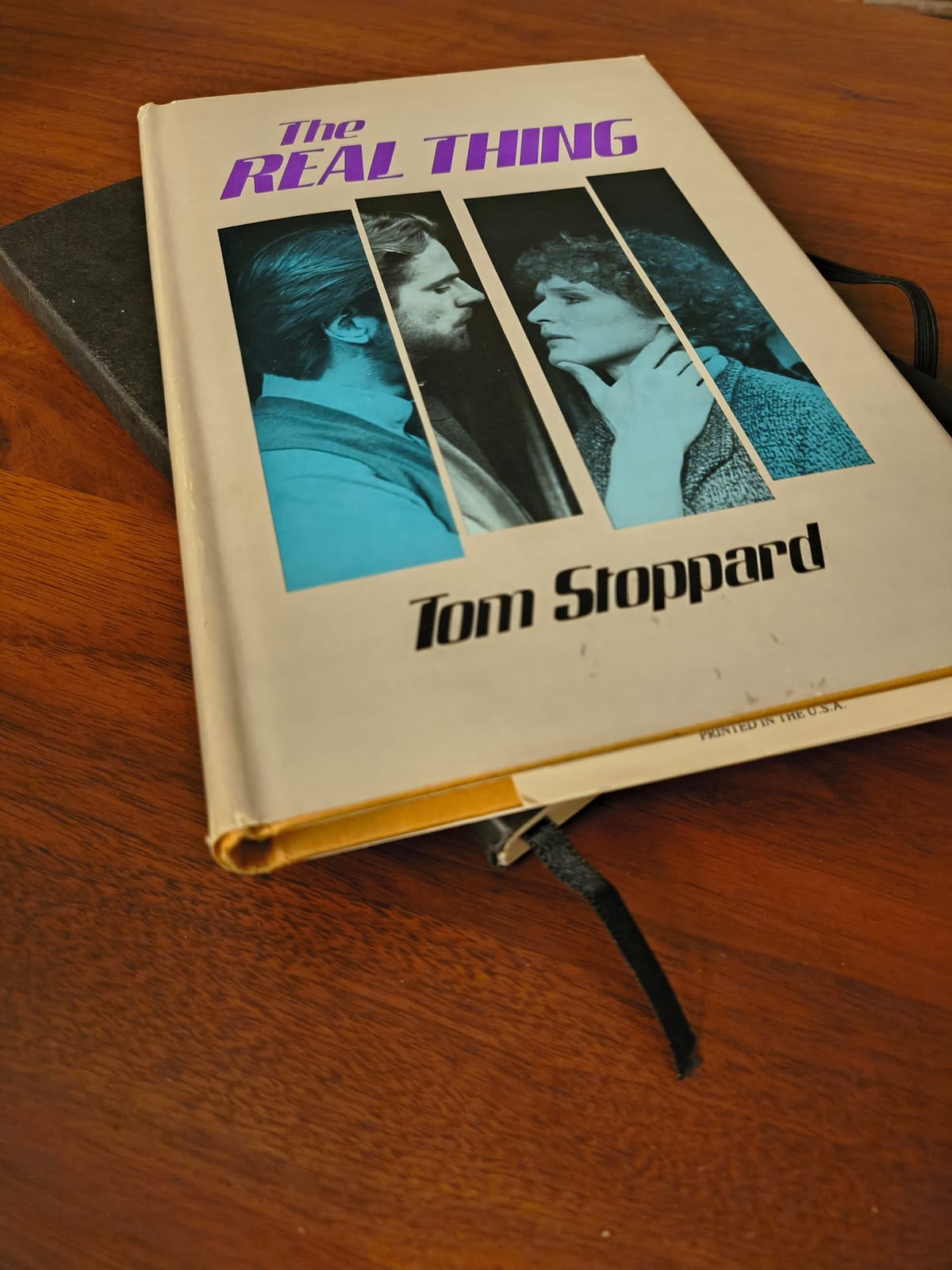
I own a paper copy of one of Stoppard’s plays, the immensely inspiring The Real Thing. It follows Henry, a playwright who has his own ambivalent feelings towards words. “I don’t think writers are sacred,” he pronounces, “but words are. They deserve respect.” But this respect includes a recognition of writing’s dark side: “Persuasive nonsense. Sophistry in a phrase so neat you can’t see the loose end that would unravel it. It’s flawless but wrong. A perfect dud. You can do that with words, bless ‘em.”
This is the antinomy faced by any honest writer. Words have a unique and marvelous ability to construct our reality—to “build bridges across incomprehension and chaos”—but they don’t have a built-in failsafe to make sure these bridges lead anyplace worth going.
Stoppard was a writer who grappled with this antinomy again and again in his work. As Ben Brantley, writing for the New York Times puts it, “He loved words to the point of mania and yet fretted over their inadequacy, making the mere act of speech seem both heroic and doomed.”
Writers with less pluck ply their trade without questioning this miraculous ability that lets them release new narratives into the world. (Narratives which sometimes colonize human thought with all the grace of an invasive species.) Stoppard was never so trivial. He understood the burden and miracle of words, and he faced it.
Whether Stoppard ever addressed this tension to his own satisfaction I don’t know, but I find immense comfort in this speech from The Real Thing:
This thing here, which looks like a wooden club, is actually several pieces of particular woods cunningly put together in a certain way so that the whole thing is sprung, like a dance floor. It’s for hitting cricket balls with. If you get it right, the cricket ball travel two hundred yards in four seconds, and all you’ve done is give it a knock like knocking the top off a bottle of stout, and it makes a noise like a trout taking a fly…(He clucks his tongue to make the noise.) What we’re trying to do is write cricket bats, so that when we throw up an idea and give it a little knock, it might…travel…(He clucks his tongue again and picks up the script.) Now, what we’ve got here is a lump of wood of roughly the same shape trying to be a cricket bat, and if you hit a ball with it, the ball will travel about ten feet and you will drop the bat and dance about shouting “Ouch!” with your hands stuck into your armpits. (Indicating the cricket bat.) This isn’t better because someone says it’s better, or because there’s a conspiracy by the MCC to keep cudgels off the field. It’s better because it’s better. You don’t believe me, so I suggest you go out to bat with this and see how you get on.
Words can build fantasies, lies, and errors just as easily as they can paint true pictures, it’s true. But there is something immensely comforting about that fact that bad writing doesn’t work. It suggests, perhaps (if you’re superstitious like I am) that the ideologies, perfidies, and mistakes so often spread by good writing won’t ultimately work either. And perhaps that means things can still be set right.
And perhaps words can be part of the solution. As Stoppard has Henry say, “If you get the right ones in the right order, you can nudge the world a little or make a poem which children will speak for you when you’re dead.”
You can listen to the original Broadway cast of The Real Thing performing the play by clicking here!